Tradelyser Logo

What Is TradeLyser? AI Trading Journal for Indian Traders

TradeLyser is an AI-powered trading journal with broker sync, strategy tracking, and performance analytics — built for traders who want a complete feedback loop.

12 min read · Updated 2026-06-05 · Reviewed by TradeLyser Content Team (Practicing Indian market traders)

Key takeaways

  • A trading journal is more than a P&L spreadsheet — it links trades, context, and review.
  • TradeLyser auto-syncs Indian brokers and organises data by strategy.
  • Insights and AI scores support your review; they do not replace it.

Most Indian traders can tell you yesterday’s P&L within seconds. Far fewer can explain, with evidence, which setup produced that P&L, whether risk was respected, or what to change before the next session. That gap is not a talent problem — it is a systems problem. A trading journal closes the loop between execution and improvement by recording trades with context, grouping them by strategy, and forcing a regular review. TradeLyser is built as an AI-powered journal for NSE and BSE markets: broker auto-sync, strategy boards, discipline tracking, and analytics that turn raw fills into decisions you can repeat.

Why a trading journal beats a spreadsheet

Spreadsheets are flexible but passive. They store numbers; they do not enforce structure. A journal workflow asks the questions that matter after the close: Did I follow my plan? Was size appropriate? Did I trade my A+ setup or revenge-trade after a loss? Without tags, notes, and session-level review, you optimise the wrong variables — chasing win rate on a setup that actually loses money, or abandoning a valid playbook because of one expiry day.

Professional desks treat journals as non-negotiable. Retail traders often skip them because manual entry feels tedious. Modern journals remove that friction by importing trades from Zerodha, Upstox, Angel One, Fyers, and others, then letting you annotate in bulk. The goal is not paperwork; it is a feedback loop short enough that you adjust next week, not next year.

What TradeLyser is (and is not)

TradeLyser is software for logging, analysing, and improving your own trading. It is not a tip service, not a signal group, and not financial advice. You remain responsible for every order. The product combines a unified trade log, daily journal, strategy/playbook tracking, reports and widgets, optional Elysia AI summaries, and mentor-style sharing for coaches who review student journals with permission.

If you are new, think of four connected ideas — journals, strategies, rules, and insights — each with a dedicated page on our methodology hub (Methodology). Journals capture context (Journals pillar). Strategies separate edges so metrics are meaningful (Strategies pillar). Rules turn discipline into something measurable (Rules pillar). Insights — charts, reports, and AI — highlight patterns you should verify in review (Insights pillar), not blindly follow. Close the loop with the weekly-review checklist (Weekly review).

Who TradeLyser is for

  • Day and swing traders on Indian cash and F&O who want broker sync instead of copy-paste.
  • Traders running multiple setups who need per-strategy expectancy, not blended P&L.
  • Mentors who need permissioned access to mentee journals without screen-sharing chaos.
  • Anyone restarting after drawdown who wants evidence before scaling size again.

It is less ideal as a pure investor portfolio tracker for multi-year buy-and-hold with sparse trades — you can still log, but the workflow shines with active sessions and repeated setups.

The core workflow in your first two weeks

Week one: data in, structure on

Connect a broker or import CSV for the last one to three months. Do not obsess over ancient history; recent data reflects current markets and your current self. Create one strategy definition — even a simple “ORB Nifty” or “Swing breakout” — and tag every trade that belongs to it. Leave other trades untagged or in a catch-all bucket until you define more playbooks.

Add a daily journal entry on days you trade: pre-market intent, post-market grade, and one sentence on emotions. Use the notebook for longer thesis notes if needed. The habit matters more than eloquence.

Week two: first honest review

Run your first weekly review: discipline first, P&L second. Check rule violations, largest loss versus plan, and whether winners came from your defined setup or impulsive adds. Open strategy-level stats only after tagging is consistent; otherwise numbers lie.

Getting data in: sync, CSV, and manual

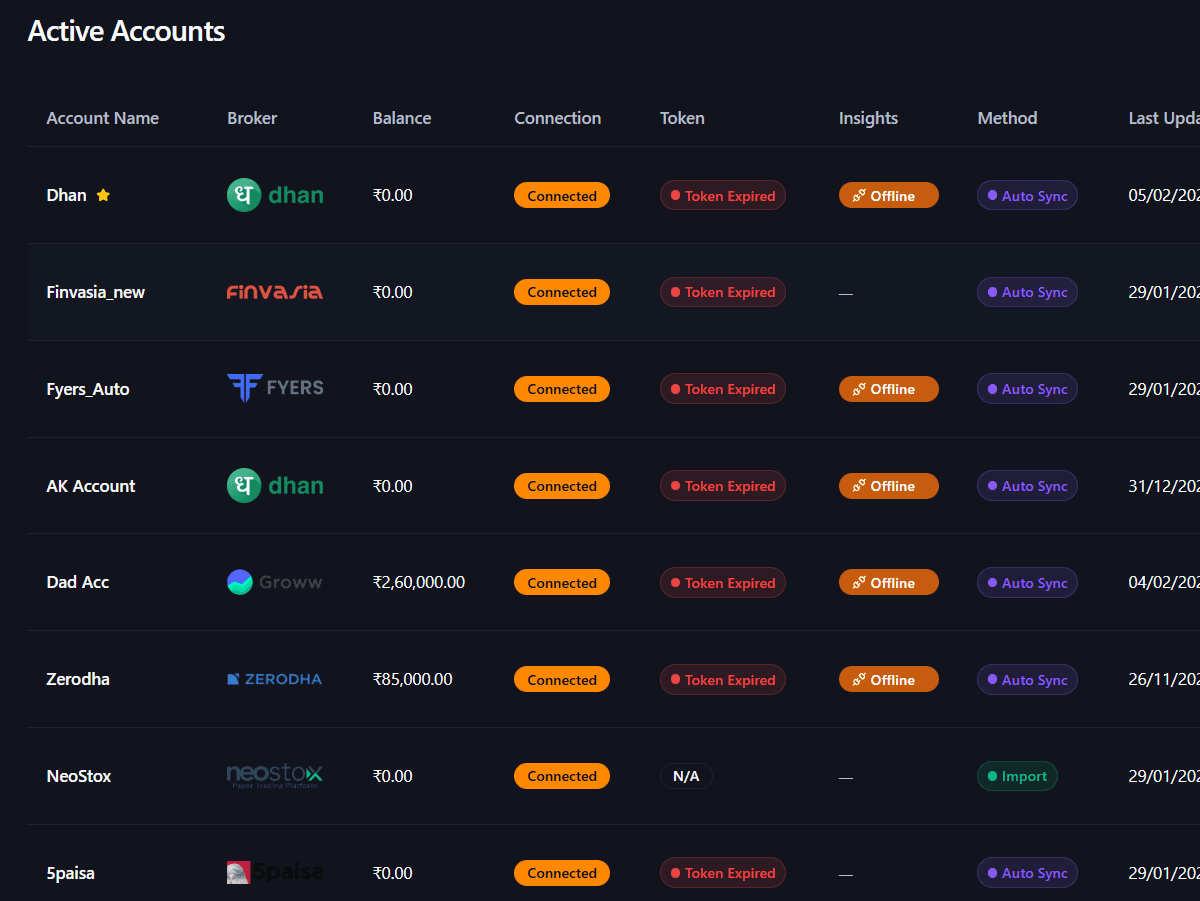
Auto-sync is the default path for supported brokers. It reduces entry errors and keeps open positions current. CSV import suits brokers without API access or one-off backfills. Manual entry still works for corrections or non-synced accounts — use it sparingly so review stays representative.

After import, reconcile symbol names and charges in settings so net P&L matches your broker statement. Small mismatches compound into wrong expectancy. TradeLyser documentation covers broker-specific connection steps; this guide stays at the workflow level.

Strategies and rules from day one

A strategy in TradeLyser is a named playbook: market, timeframe, entry trigger, exit rule, and max risk. You are not predicting the future; you are defining what you will measure. Without that definition, “win rate” mixes incompatible trades.

Discipline rules belong in the discipline diary: max daily loss, max trades, no averaging losers, etc. Score adherence separately from outcome. A disciplined loss is green for process; an undisciplined win is a red flag.

Metrics you will see early (without drowning)

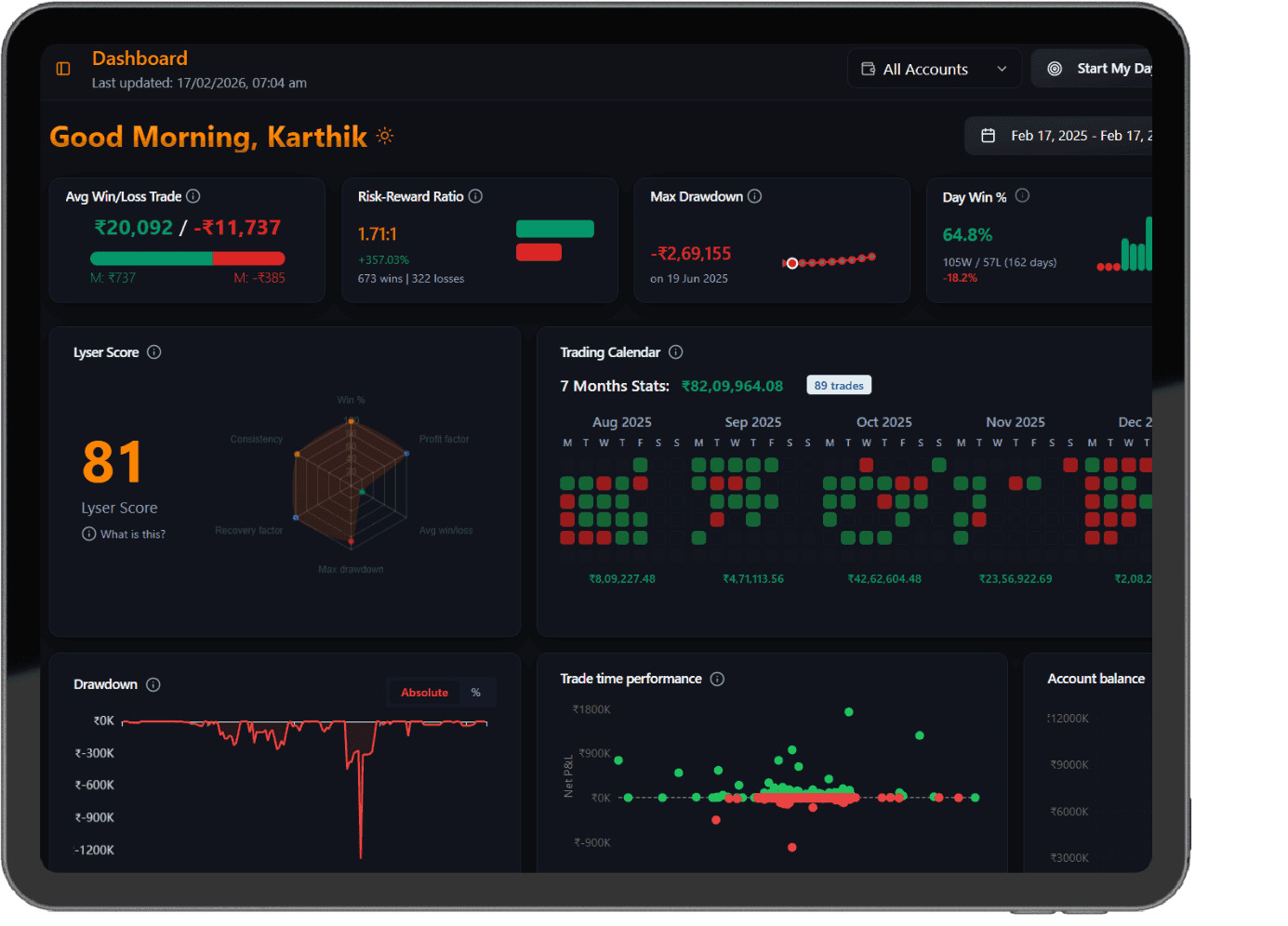
Start with four numbers per strategy: trade count, net P&L, win rate with average win/loss size, and max drawdown. Add profit factor and expectancy when sample size exceeds roughly thirty closed trades. Our glossary defines each term; our analytics guides explain how to interpret them together.

Dashboard widgets are snapshots — useful for alerts, not conclusions. Pair a red widget day with journal notes before changing rules.

Where AI fits for beginners

Elysia AI can summarise behaviour, flag concentration in one symbol, or comment on deteriorating rolling expectancy. Treat outputs as hypotheses: open the underlying trades, verify, then decide one change for next week. AI does not replace your review ritual; it prioritises what to inspect first.

Common mistakes when starting a journal

  • Tagging everything as one strategy — split when setups differ materially.
  • Reviewing only monthly P&L — weekly process review catches drift earlier.
  • Changing rules after every loss — pre-commit change thresholds in writing.
  • Ignoring costs and slippage — net metrics only.
  • Skipping journal on green days — winners hide rule breaks too.

Privacy, security, and expectations

Your trading data is sensitive. Use strong account security, review connected sessions periodically, and understand mentor permissions before granting access. TradeLyser is an analytics tool; share performance publicly only if you choose to.

Indian market context: sessions, costs, and instruments

NSE cash and derivatives have distinct liquidity pulses — opening auction, first hour trend, midday compression, and closing imbalance. Your journal should record session context because a setup that works at 9:20 may fail at 14:00. Include instrument type in strategy definitions: cash equity, index futures, index options, stock options, and commodities if applicable. Costs in India include brokerage, STT, exchange charges, GST, and stamp duty depending on product — net P&L in your journal must reflect these or expectancy will look rosier than bank reality.

Corporate actions, splits, and delisted symbols can break naive P&L if imports are stale. Reconcile monthly against contract notes. For F&O, track expiry week behaviour separately in tags — many traders discover half their annual drawdown clusters on monthly expiry Thursdays.

Building a sustainable routine around work and family

Part-time traders fail journals when rituals demand two hours nightly. Design minimum viable review: five minutes daily, thirty-five minutes weekly. Batch tagging on Wednesday if Monday was hectic. Use mobile access for grades, desktop for analytics. Sustainability beats perfect logs that collapse after three weeks.

Case study: three traders, three starting points

Trader A — intraday Nifty options, high frequency: needs broker sync, strict max-trade rule, strategy tags per spread type, weekly rolling expectancy. Trader B — swing cash, low frequency: CSV monthly fine, journal emphasis on thesis notes and drawdown in rupees. Trader C — mentor student: permissioned access, discipline score public to mentor, AI summary as homework before call. Same software, different emphasis — your configuration should mirror your niche.

Deeper questions beginners ask

“Do I journal paper trades?” Only if you execute them with the same rigour as live — otherwise create a separate research tag and never blend with live expectancy. “How long until data is useful?” Thirty closed trades per strategy is a floor; three months calendar minimum for seasonal bias. “Can I migrate from Excel?” Yes — import CSV, accept one weekend of tagging, then stop dual-maintaining spreadsheets or numbers will diverge.

Next steps on TradeLyser Learn

After setup, deepen by pillar: trading journal guides for review rituals, strategy guides for comparison and capital allocation, analytics guides for P&L and win rate, and AI guides for safe use of scores. Pick one pillar per month instead of reading everything at once — implementation beats consumption.

If you are ready to start, open the app, connect one broker, define one strategy, and schedule a 30-minute review this Friday same time every week. Consistency of review is the compound interest of trading improvement.

Closing reflection: markets will always offer a new guru, indicator, or macro headline to chase. Your journal is the anchor that says what you actually did, not what you wish you had done. TradeLyser exists to make that anchor light enough to lift every week. The methodology hub (Methodology) and weekly-review checklist (Weekly review) show how pieces connect; the Learn pillars deepen each skill; support answers when something breaks. You supply honesty and rhythm. Thousands of traders in India now run the same Nifty candles — edge differences are process, not secret charts. Start where you are, with the size you can afford to learn from, and let the next thirty days of tags and reviews tell the truth about your next thirty months.

Extended playbook: your first 30 trading days with a journal

Days 1–5 focus purely on data integrity. Connect the broker, verify yesterday’s P&L against the contract note, and import a short historical window if you want immediate context. Do not tune indicators or add new setups during this window — you are calibrating trust in the log. Days 6–10 introduce one strategy definition and tag every trade that qualifies; leave everything else in an “unclassified” bucket rather than forcing false precision. Days 11–15 add daily journal grades and one discipline rule you can objectively score. Days 16–20 run a mini-review mid-month even if it feels early — you are practicing the ritual, not judging the edge. Days 21–25 add a second strategy only if you already trade two distinct setups live. Days 26–30 conduct the first real weekly review with checklist, compare win rate and average win/loss per strategy, and write one change for month two.

Throughout the thirty days, notice psychological resistance: skipping journal on red days, avoiding tags on embarrassing trades, refreshing P&L instead of notes. Those behaviours predict future blow-ups better than any indicator. TradeLyser reduces friction, but you still choose honesty. Pair the app with a calendar reminder and a quiet 35-minute slot — phones on do-not-disturb, no market replay during review unless your rule set explicitly includes replay study.

When you graduate the first month, set explicit success criteria: not “be profitable” but “90% of trades tagged, weekly review completed four of four weeks, discipline log non-empty.” Profitability may lag; process adherence should not. This framing keeps beginners from abandoning the journal during variance.

Capital preservation during learning phase: size small enough that journal honesty is easy — you will not skip tagging to avoid facing a large loss. Many veterans wish they had full logs from early years; you can start that archive today even if size is modest.

Finally, connect with Learn pillars deliberately: after day thirty, read the trading journal review guide to deepen ritual, then strategy comparison when two playbooks exist, then win rate analytics when sample allows, then AI scores once human review is habitual. Sequence matters more than speed.

Community, education, and support boundaries

Trading communities can accelerate learning or destroy it with comparison anxiety. Use TradeLyser privately first; share selectively with mentors or small accountability groups. When you do share, share process metrics — discipline adherence, sample size, defined risk — not screenshot P&L. Education on this Learn hub is evergreen; the blog covers timely market commentary; documentation covers clicks in the product. Know which layer you need before searching: concept (Learn), news (blog), button path (docs).

Support tickets are for product issues — sync failures, billing, access. They are not for trade decisions. Keeping that boundary prevents you from outsourcing discretion. If sync fails, fix data before interpreting any metric. If metrics look wrong, verify calculation method and import completeness before blaming the setup.

Long-term edge accumulation resembles compound interest: small improvements in tagging accuracy, review attendance, and rule clarity stack over years. The journal is the ledger of that compound process. Starting late is fine; starting without structure is not.

Hardware and ergonomics matter more than appreciated: stable internet for sync, large monitor for review sessions, backup of exported reports quarterly. You are building a professional habit; environment signals seriousness to your own brain.

When considering upgrades or paid tiers, decide based on feature need — more accounts, AI depth, mentor seats — not based on yesterday’s P&L emotion. Feature lists live on pricing pages; this guide does not replace commercial evaluation, only reminds you to separate tooling decisions from revenge spending.

Record your personal “why trade” statement in the notebook and re-read quarterly. When drawdowns hit, the why statement decides whether you pause with dignity or double down with shame. Journals without a why statement become P&L casinos. TradeLyser stores the how; you supply the why. Together they keep you in the profession longer than peers who treat markets as lottery tickets.

FAQ

Is TradeLyser free to try?

Yes — start on the app and explore sync, journal, and reports before upgrading.

Is TradeLyser an AI trading journal for India?

Yes — TradeLyser is built for NSE and BSE traders with Indian broker auto-sync, rupee risk tracking, and AI-assisted review on your own trade history.

Glossary

Start journaling with TradeLyser

Connect your broker, tag strategies, and review performance with AI-assisted insights.