How to Review Your Trading Journal (Weekly Ritual)
A structured weekly trading journal review: what to read, what metrics to check, and how long it should take.
12 min read · Updated 2026-06-05 · Reviewed by TradeLyser Content Team (Practicing Indian market traders)
Key takeaways
- Block 30–45 minutes weekly with the same checklist.
- Start with discipline and rule violations, then P&L.
- Compare journal entries week over week for behaviour patterns.
- End every review with one written change for the next week.
A trading journal is only as valuable as the review ritual behind it. Recording trades without reflection is archiving; reviewing without structure is anxiety. The traders who compound skill treat the journal as a weekly decision meeting with past versions of themselves — disciplined, time-boxed, and focused on process before P&L. This guide walks through how to review your trading journal effectively using TradeLyser: what to read, in what order, how long it should take, and how to leave each session with one actionable change instead of a pile of guilt.
The mindset: judge process, then outcomes
Outcomes are noisy. A valid setup can lose; a reckless trade can win. If you grade yourself only on rupees, you reinforce randomness. Start every review by asking: Did I execute my written rules? Did position size match my plan? Did I trade only defined setups? Only after that layer should you interpret P&L, win rate, and drawdown.
This ordering protects you on good weeks — green P&L with hidden rule breaks is dangerous because it trains bad habits that eventually surface in size or frequency. It also protects you on red weeks — a losing week with high discipline may mean market regime shift, not personal failure.
Daily, weekly, and monthly cadence
Daily micro-review (5–10 minutes)
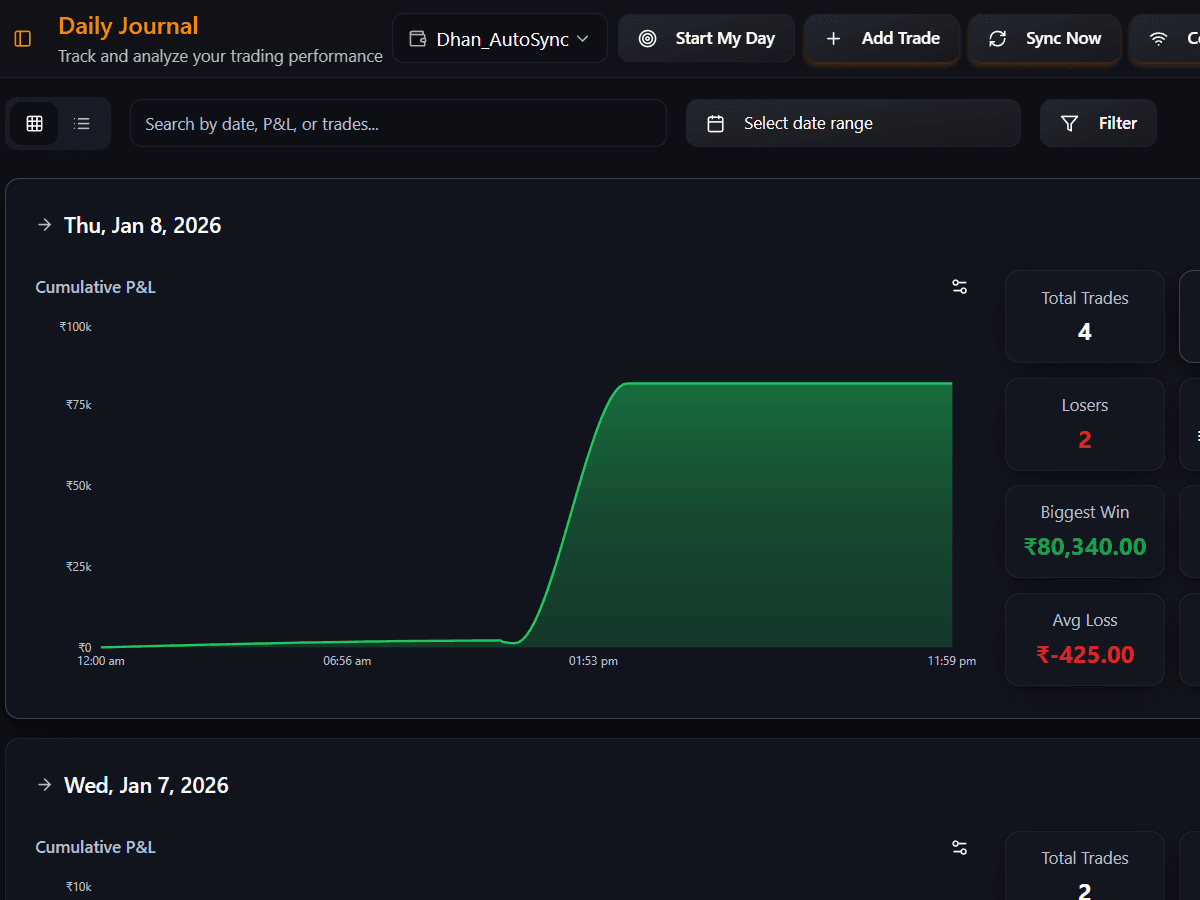
After the close, log three fields: grade (A/B/C), one line on emotion, and whether each trade matched a tagged strategy. Do not rewrite the day narratively unless something unusual happened. The daily pass is a smoke alarm, not a full inspection.
Weekly core review (30–45 minutes)
Block the same slot every week — many traders use Saturday morning or Sunday evening. Use the checklist in the next section. This is where you compare journal entries, pull strategy stats, and decide one change for the coming week.
Monthly deep review (60–90 minutes)
Once a month, zoom out: rolling expectancy, equity curve shape, symbol concentration, and discipline score trend. Ask whether your playbook still fits current volatility and whether capital allocation across strategies still matches evidence.
The weekly journal review checklist
Work top to bottom without skipping.
- Discipline: violations count, worst violation, pattern (time of day, symbol, after losses).
- Session notes: read daily grades; highlight days that do not match P&L (calm red days, euphoric green days).
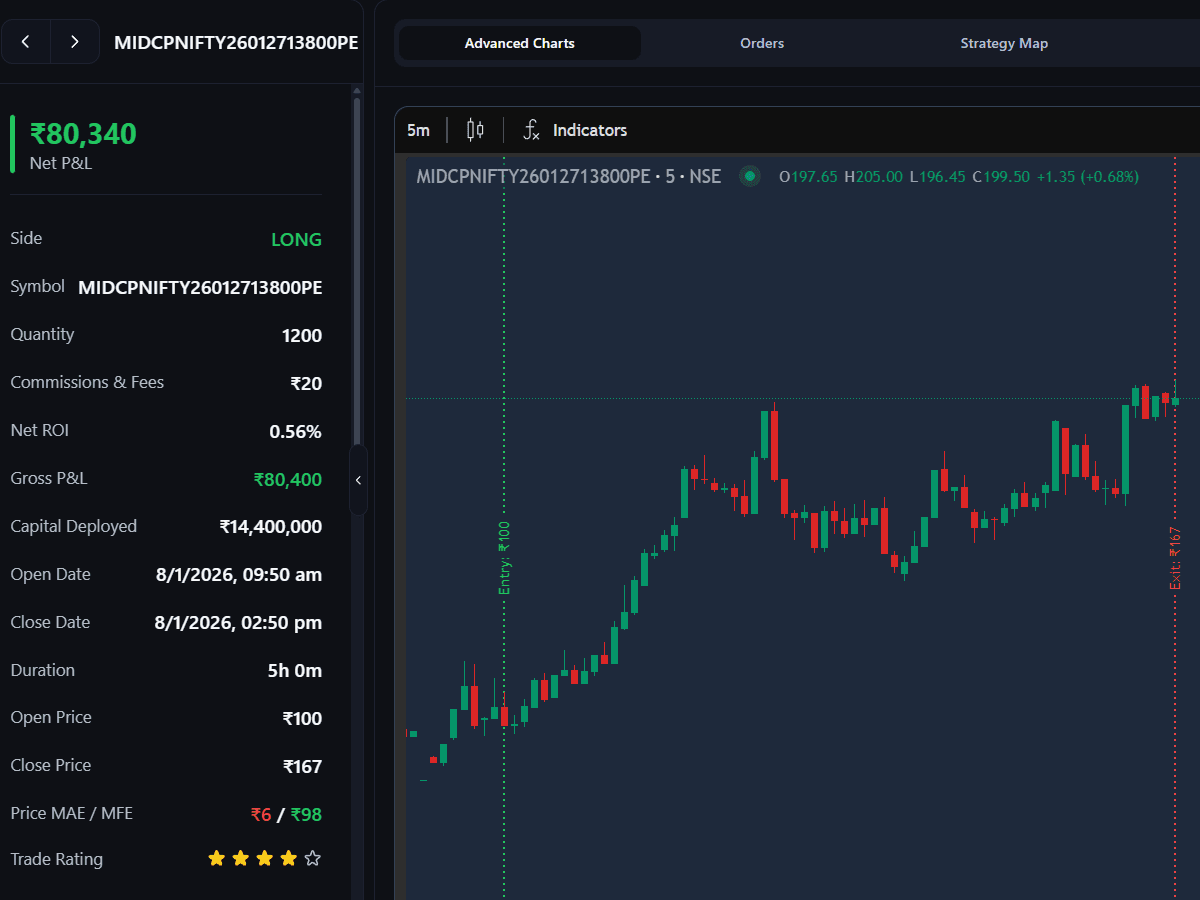
- Best trade: setup, risk, execution, lesson — could you replicate process?
- Worst trade: was loss planned? if not, what trigger broke rules?
- Strategy stats: per-playbook trade count, net P&L, expectancy, max drawdown for the week.
- Concentration: any single symbol or sector dominating P&L?
- One change: single behavioural or rules adjustment for next week only.
How to compare journal entries across weeks
Open two weeks side by side in TradeLyser. Compare tags, not stories. Did violation tags rise while P&L was flat? Did you trade more on boredom days? Did journal grades slip before drawdown deepened? Patterns across entries predict next month better than one heroic trade.
When comparing winning and losing weeks, separate market effect from behaviour. A losing week with high discipline may warrant smaller size, not strategy abandonment. A winning week with poor discipline warrants humility, not size-up.
Using the trading calendar in review
Colour-coded calendars reveal clustering: expiry Thursdays, RBI policy days, first hour only, post-lunch chop. Mark event days in notes so you do not confuse structural market difficulty with personal failure. If half your monthly loss came on two event days, the lesson may be sit-out rules, not overhaul every entry criterion.
Discipline score: what to log and how to read it
Score rule adherence, not win rate. Predefine five to eight rules you can objectively mark yes/no: max loss hit, max trades, no revenge entry within X minutes, no size increase after loss, only A-setup entries. Track weekly percentage adherence. Trend matters more than any single day.
If adherence is high but P&L is negative, investigate setup edge or market fit — process is sound, hypothesis may need work. If adherence is low and P&L is positive, you are borrowing from future blow-ups.
Notes, screenshots, and tags that scale
Use a small controlled tag set: setup name, mistake type, emotional state, market regime. Attach screenshots when chart context explains the trade better than words. Future you searches tags; future you does not read novels. Consistency beats detail you will never revisit.
Reviewing with a mentor
If you use mentor access, send your weekly summary: discipline score, one chart of equity, one best and one worst trade with tags. Mentors should comment on process metrics, not stock picks. Prepare questions in advance to respect time.
Review mistakes that waste time
- Scrolling all trades without a checklist — leads to rumination.
- Changing three rules at once — you never know what worked.
- Skipping review on green weeks — misses rule breaks.
- Equating self-worth with weekly P&L — review becomes avoidance.
- No written one-change commitment — insights evaporate by Monday.
TradeLyser workflow tie-in
Use daily journal entries for micro grades, compare entries for week-over-week behaviour, trading calendar for temporal patterns, discipline diary for scores, and strategy board only after tags are trustworthy. Documentation in the help centre covers click-level steps; this guide is the ritual.
Simple templates you can copy
Weekly opening: “This week I traded X days, adherence Y%, net P&L Z. Primary violation: ___. Best process win: ___. Worst rule break: ___. Next week one change: ___.” Monthly opening adds rolling expectancy and drawdown versus limits. Paste into notebook or journal notes.
Emotional literacy without therapy speak
Name states plainly: calm, rushed, revenge, bored, overconfident, fearful. Track correlation with violations, not with P&L alone. You may find revenge states produce 2× trade count with half win rate — actionable without diagnosing childhood. One emotional trigger per month is enough to work on.
Post-loss and post-win protocols
After hitting daily max loss: journal entry required, no re-entry same day rule logged as yes/no. After exceptional win day: journal must answer “Did I break rules?” Wins breed size creep. Write protocols when calm; follow when hot.
Quantifying review quality
Score your own review session: Did I complete checklist? Did I write one change? Did I open strategy stats? Binary weekly review adherence predicts long-term improvement better than motivation speeches.
Long-form reflection quarterly
Quarterly, write one page: Who am I as a trader now versus six months ago? Which strategy earned capital share? Which habit died? Attach screenshot of equity curve and discipline trend. Future you reads this when considering abandoning the journal during drawdown.
Closing: review is the product
The journal’s return on investment is not the software fee — it is the quality of your weekly review. Protect the slot like a client meeting. Over months, small process edges and avoided blow-ups compound more than any single indicator tweak. Start this week: book 35 minutes, run the checklist once, write one change, execute it for five sessions, then review again.
Voice dictation on mobile can capture post-market thought in thirty seconds; edit to one sentence before saving. Speed reduces skip rate on red days when typing feels heavy. Link dictated entries to the calendar day so weekly compare stays chronological.
Advanced reviewers maintain a “mistake ledger” separate from daily notes: date, mistake type, trigger, cost in R, corrective rule adjustment. Quarterly, rank mistakes by total R cost — the top one mistake becomes next quarter’s focus. This ledger transforms vague guilt into engineering tasks. TradeLyser tags feed the ledger automatically if you standardise tag names. Resist adding twenty mistake tags; five cover most retail pathology: late entry, early exit, oversize, off-plan symbol, revenge sequence. The ledger also helps mentors coach you with numbers instead of vibes. When you can say “FOMO entries cost me 4.2R last quarter,” you will actually stop FOMO entries because the rule change is targeted, not generic “be disciplined.”
Print the weekly checklist and tape it beside the monitor. Physical artifacts beat bookmarks buried in browser tabs. Cross off items with a pen; the tactile finish signals closure and reduces same-evening emotional re-trading. After twelve weeks the printed sheets prove you inspect behaviour on schedule — that identity is the journal’s deepest return, larger than any single green week.
Handoff to strategy and analytics review
After journal review, open strategy comparison only if tagging is current — otherwise fix tags first. Journal tells you whether you followed rules; strategy stats tell you whether the rules pay. Analytics tells you whether headline metrics like win rate mislead. Sequence prevents chasing numbers that behaviour never supported. Link weekly journal conclusion to one strategy hypothesis test for the coming week, written in one sentence at the bottom of the review page. Browse 28 free India-first templates at Free templates — including weekly review sheets, pre-trade checklists, and broker CSV analyzers.
Extended guide: structuring review sessions by trader type
Intraday traders should review same evening while memory is fresh; keep sessions under 40 minutes to avoid fatigue. Swing traders can review Sunday with open positions noted separately — mark which thesis is still valid. Part-time traders batch two days per review but must not exceed seven calendar days between reviews or emotional memory fades. Options traders should always list structure type in notes during review — naked vs defined risk — because P&L alone misleads on win rate.
Build a “review debt” rule: if you skip two weekly reviews, pause live size by fifty percent until backlog is cleared. Review debt is how journals die quietly. The debt rule sounds harsh; it is cheaper than unreviewed revenge trading.
Archive screenshots of charts only when they change your future rule — otherwise storage becomes procrastination. Voice notes transcribed into one sentence beat five-minute rants you will never replay.
Seasonal reviews: after Diwali, financial year-end, and major index rebalance weeks, add a journal tag “event week” and compare discipline versus normal weeks — you may choose to stand down during chronically poor personal periods rather than fighting them.
Your future self will thank you for honest compare-journal entries when considering a career break or capital injection — data beats nostalgia.
Depth work: turning journal notes into rule changes
Most notes are descriptive (“bad day, choppy market”). Transform them into testable rules: “If VIX above X and I have two losers, stop for day.” Test one rule per fortnight. Journal compare view then shows whether the rule reduced violations — measurable closure.
Pair written notes with numeric grades every day for six months; you will see grade drift before P&L drift. That early signal saves accounts.
Avoid performance theatre: long essays without behaviour change are procrastination. If note length exceeds five sentences more than twice a week, shorten template.
For couples or families, agree that journal time is work time — non-negotiable 35 minutes. Domestic respect for the slot reduces skipped reviews.
When migrating from another journal platform, import history if possible, spend one weekend tagging, then never look back — dual platforms guarantee contradictory self-narratives.
Celebrate review streaks like workout streaks — ten weekly reviews in a row deserve a small non-trading reward. Streak psychology reinforces the meta-skill of reflection. Missing one week is human; missing three is a pattern requiring calendar fix, not willpower speeches.
Synthesis: the weekly review is a contract between present you and future you. Present you wants to forget red days; future you needs their data. The contract terms are simple — show up, run the checklist, log one change, verify next week. TradeLyser stores the evidence; the contract is yours. Over twenty-six weekly reviews in a year, you will have twenty-six explicit improvements attempted. Even if half fail, the surviving half compound. Traders who skip reviews rely on memory; memory rewrites pain and inflates pride. Traders who review rely on logs; logs are blunt and kind. Blunt because they show rule breaks without excuse; kind because they let you fix one thing at a time instead of reinventing everything after drawdown. If you teach a friend to journal, teach the contract, not the software buttons. Buttons change; contracts endure. When life gets busy, shrink the contract — five-minute daily, twenty-minute weekly — but do not void it. Voided contracts show up later as margin calls and apology posts. Renew the contract every Sunday night, same alarm, same chair, same first question: discipline yes or no. Everything else in this guide is commentary on that question.
Your journal becomes a career asset when it outlives platforms. Export quarterly summaries, store PDFs locally, and keep a one-page annual letter to yourself about process changes. Platforms evolve; your exported discipline history remains evidence in job interviews, prop evaluations, or personal accountability partnerships. Treat exports as seriously as tax documents — they are proof of professionalism in a field crowded with screenshots. When you feel like quitting journaling during drawdown, read last year’s annual letter before deleting anything; usually you already solved a similar problem and forgot. Continuity beats reinvention.
Invite accountability gently: share weekly discipline score with a peer, not P&L. Peers cannot envy discipline scores the way they envy green days, so relationships survive. Accountability without comparison keeps review honest.
This guide is the flagship trading-journal pillar on TradeLyser Learn — read it once fully, then keep the checklist printed for fifty-two weeks. Mastery is repetition, not novelty.
FAQ
How long should a weekly review take?
Thirty to forty-five minutes for active traders; twenty minutes minimum if you use a printed checklist.
Should I review on green or red weeks first?
Same checklist both weeks — discipline before P&L prevents bias.
Glossary
Related guides
Start journaling with
TradeLyser
Connect your broker, tag strategies, and review performance with AI-assisted insights.